Toilet tank · a decision
Running toilet: fix it or replace it?
A running toilet is worth fixing the same week: EPA's 2017 page put the waste at about 200 gallons a day, and a stuck fill valve can waste 4,300.
200 gal a day
gallons a day a running toilet can waste (EPA's January 2017 archived page)
Fix a running toilet this week; replace the whole toilet only if it is a pre-1994 model or the china is cracked.
Worked out by Where Your Gallons Go from 8 dated sources · numbers checked 11 November 2026
The answer by situation
- Dye shows in the bowl, toilet is 1.6 gpf or lessFix nowA flapper swap stops a leak that can outrun the roughly 1,530 gallons a year a new toilet would save.
- Tank refills on its own or hisses nonstopFix nowEPA puts one stuck-open fill valve at 4,300 gallons a day.
- Leaking toilet made before 1994ReplaceOne job ends the leak and the 3.5 gpf flush, about 10,640 gallons a year.
- Crack in the tank or bowlReplaceParts cannot seal cracked china.
- No dye in the bowl, but the bill jumpedTest firstRun the two-hour meter test to find the leak elsewhere.
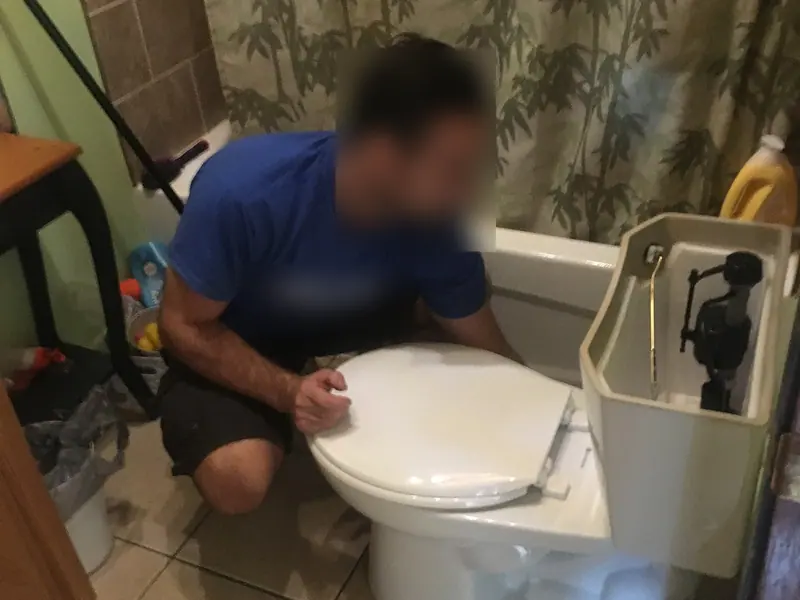
How do you do a toilet dye test?
Drip some food coloring into the tank, leave it 10 minutes without flushing, then look in the bowl. Any color there means water is slipping past the flapper, EPA's Fix a Leak Week page says. Flush right after so the dye does not stain. EPA's Home Maintenance page suggests repeating it at least once a year.
How much water does a running toilet waste?
More than most people guess. EPA's January 2017 archived page put a running toilet at about 200 gallons a day, and the February 2026 Know Your Flow sheet counts 4,300 gallons a day, and as much as $1,400 a month, from one jammed fill valve. The same program's leak-device guide says about 20 percent of toilets leak.
| Problem | Gallons a day | Gallons in 30 days | Water dollars in 30 days |
|---|---|---|---|
| Stuck fill valve (EPA, 2026) | 4,300 | 129,000 | $782 |
| Running toilet (EPA, 2017 archive) | 200 | 6,000 | $36 |
| Extra flush water, 3.5 gpf vs 1.28 gpf toilet | 29 | 874 | $5.30 |
| Average household's leaks, all fixtures (EPA) | 25 | 764 | $4.63 |
| Extra flush water, 1.6 gpf vs 1.28 gpf toilet | 4 | 126 | $0.76 |
Source under the table: EPA WaterSense, Know Your Flow and Fix a Leak Week. Our arithmetic from EPA's figures over 30 days, priced at EPA's calculator rate of $6.06 per 1,000 gallons; EPA's own $1,400 a month for a stuck fill valve uses costs it does not list.
The flush rows come from the payback table on replace an old toilet, divided by 365 and multiplied by 30. Read down the gallons column: a toilet that runs steadily wastes several times what an old flush does.
Should you fix the flapper or replace the toilet?
Fix it if the toilet is 1.6 gpf or less and the china is sound. EPA's Residential Toilets page says most toilet leaks come from old or worn flappers, and a flapper is a small part that seals the hole at the bottom of the tank. Replace the whole toilet when it is a pre-1994 model, because then you end the leak and the 3.5 gpf flush in one job.
How often should a toilet flapper be replaced?
At least every five years, EPA says, and checked in between. A flapper can leak quietly long before it fails outright, so a yearly dye test is the check. If yours is older than you can remember, replace it.
What if the tank keeps refilling with no dye in the bowl?
Then look at the fill valve and the overflow tube. If the water level in the tank sits at or above the top of the overflow tube, the fill valve is not shutting off, which is the 4,300-gallon case. A fixture maker's video below shows a second check: mark the waterline in the tank, shut the supply, and see whether the level drops.
Why does your bill say leak when the toilet passes?
The leak may be somewhere else. EPA's two-hour meter test catches leaks anywhere on your side of the meter, and a dripping faucet dripping once each second tops 3,000 gallons yearly. Steady small leaks are what leak sensors and shutoff valves are built to flag.
When the answer flips
- The toilet was made before 1994: replacing it ends the leak and saves about 10,640 gallons a year of flush water.
- The tank or bowl is cracked: no flapper or fill valve can seal it, so replace.
- A new flapper still leaks: the flush valve seat may be worn, and a plumber may advise a new flush valve or toilet.
- The stop valve is seized: fixing the toilet now includes a valve, which is a plumber's job if you are unsure.
What to buy or ask a plumber
- Take the old flapper, or a photo of it, to match its width and any foam float.
- Note the toilet's maker and model from inside the tank before buying parts.
- Ask your water utility whether it offers a free house call or a leak-repair rebate.
- If you replace the toilet, look for the WaterSense label (1.28 gpf or less).
Also asked
Can a toilet leak without making any noise?
Yes. A worn flapper can let a thin stream into the bowl with no hiss at all, which is why EPA suggests a yearly dye test rather than waiting to hear it.
Will food coloring stain the toilet?
It can if it sits. EPA says to flush right after the 10-minute check.
Why does my toilet refill by itself every few hours?
Water is leaving the tank slowly, most often past the flapper. When the level drops far enough, the fill valve tops it up. A dye test usually confirms it.
Does a utility ever pay to fix a leaking toilet?
Some do. Roseville, California has, since July 15, 2026, covered half of a qualifying repair bill, capped at $750, once its free house call confirms the leak (checked 11 Nov 2026). The water utility rebates page lists other examples.
The bathroom page lists the room's other decisions, from showerheads to aerators.
How we reached this
We based this verdict on EPA's dye test and flapper advice (Fix a Leak Week, updated March 13, 2026), EPA's February 2026 leak-device documents and, for the 200-gallon figure only, EPA's frozen January 2017 page. The ledger's monthly numbers are our multiplication at EPA's $6.06 rate; your bill sets the real cost. We found no national figure for how much an average silent flapper leak wastes, so the table shows the large cases and the average across all household leaks.
Sources
- US EPA WaterSense — Fix a Leak Week · dye test, five-year flapper advice, 9,300 gallons, faucet drip · checked 11 Nov 2026
- US EPA WaterSense — Home Maintenance · test at least once a year · checked 11 Nov 2026
- US EPA — US Indoor Water Use, archived copy of January 19, 2017 · about 200 gallons a day · checked 11 Nov 2026
- US EPA — Know Your Flow, February 2026 · stuck fill valve 4,300 gallons a day, $1,400 a month · checked 11 Nov 2026
- US EPA — Know Your Flow leak-device guide, February 2026 · about 20 percent of toilets leak · checked 11 Nov 2026
- US EPA WaterSense — Residential Toilets · worn flappers cause most leaks · checked 11 Nov 2026
- City of Roseville — leak repair rebate · 50% up to $750, launched July 15, 2026 · checked 11 Nov 2026
- US EPA WaterSense — How the WaterSense Calculator Works · $6.06 rate and flush assumptions · checked 11 Nov 2026
More from the bathroom
 Should you replace an old toilet?Replace it if it was made before 1994; keep a working 1.6 gpf toilet unless it leaks or you remodel.Replace10,640 gal
 Dual flush or single flush: which saves more?Either works; pick dual flush only if its full flush is 1.28 gpf or less and your household uses the half button.Depends1,530 gal
 Is a low-flow showerhead swap worth it?Swap a head that fills a gallon in under 20 seconds for a WaterSense model rated 2.0 gpm or less.Swap it2,700 gal
 Should you swap your bathroom faucet aerator?Screw on a 1.5 gpm WaterSense aerator if the faucet is marked 2.2 gpm or unmarked; the faucet can usually stay.Swap it700 gal
 Bath or shower: which uses less water?Shower for everyday washing; a full bath uses about as much as a 35-minute shower on a 2.0 gpm head.Shower54 gal