Hot water pipes · a decision
Should you insulate your hot water pipes?
Insulate hot water pipes wherever you can reach them, in a basement, crawlspace or garage: EPA says insulation as thick as the pipe is wide cuts the temperature drop to the tap by half.
50%
smaller temperature drop from heater to tap when insulation wall is at least the pipe's diameter (EPA, May 2026)
Insulate exposed hot pipes, first 3 feet at the heater first; keep foam at least 6 inches from a gas flue.
Worked out by Where Your Gallons Go from 4 dated sources · numbers checked 11 November 2026
The answer by situation
- Exposed hot pipes in a basement, crawlspace or garageInsulateEPA says the right thickness halves the temperature drop between heater and tap.
- First 3 feet of hot and cold pipe at the water heaterInsulateThe Energy Department's archived guidance names this stretch first.
- Pipes within 8 inches of a gas heater's flueFiberglass onlyUse unfaced fiberglass wrap at least 1 inch thick, and keep any insulation 6 inches from the flue.
- Pipes sealed inside finished wallsLeave themOpening walls for insulation alone rarely makes sense; plan it into a remodel instead.
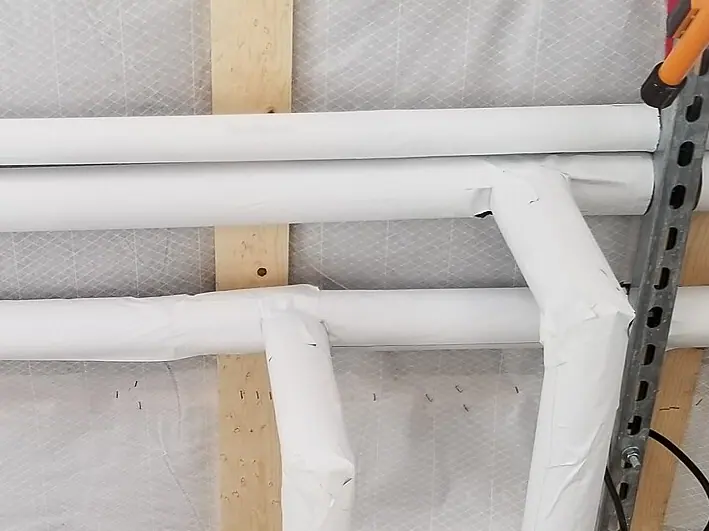
Does insulating hot water pipes save water?
Some, indirectly; it mostly saves heat. EPA's hot water delivery guide (May 2026) says that when the insulation's wall is at least as thick as the pipe's nominal diameter, the temperature drop from heater to fixture falls by 50% and the water in the pipe stays hot longer between uses. Water that is still hot from the last draw does not have to be run off again, which trims some of the 6.35 daily gallons EPA counts as lost to waiting, a figure EPA's hot water page for builders pairs with a 0.5-gallon pipe benchmark.
The Energy Department's archived how-to says insulated pipes can deliver water 2°F to 4°F hotter, which can let you lower the heater setting. It does not make the first draw of the morning arrive sooner: the cold water already in the pipe still has to clear.
Which pipes should you insulate first?
The ones you can reach, starting at the heater. The archived DOE page says to insulate especially the first 3 feet of hot pipe from the water heater and the first 3 feet of the cold inlet. After that, the long exposed runs through unheated basements, crawlspaces and garages give the most back, because that is where pipe water cools fastest.
Pipes inside finished walls are a remodel job. If you are opening walls anyway, see planning hot water in a remodel, where pipe size and length matter more than the wrap.
How thick should pipe insulation be?
At least as thick as the pipe is wide, for the 50% figure. EPA's rule applies to pipes up to 2 inches: half-inch pipe takes a half-inch wall, three-quarter-inch pipe a three-quarter-inch wall. Check the sleeve label against your pipe size and material before you buy, and make sure the seam closes fully.
The Energy Department clip sizes foam sleeves, covers the first three feet at the heater, and tapes or ties the sleeves every foot or two. On a gas heater, keep insulation at least 6 inches from the flue and switch to uncoated fiberglass wrap within 8 inches.
| Item | Figure | What it means |
|---|---|---|
| Temperature drop heater to tap, wall ≥ pipe diameter | 50% smaller (EPA) | Water arrives hotter and stays hot longer |
| Delivered temperature gain | 2°F to 4°F (DOE archive) | May allow a lower heater setting |
| 40 ft of ½-inch copper type L | 0.48 gallons | Water that cools and runs off if the pipe goes cold |
| 40 ft of ¾-inch copper type L | 1.01 gallons | Twice the water at risk on a larger pipe |
| Average home's daily wait waste | 6.35 gallons (EPA) | The total insulation chips away at between uses |
Source under the table: US DOE Energy Saver (archived) and US EPA WaterSense. Pipe volumes and gallons are our arithmetic from EPA Table 2 (128 ounces to the gallon); the other rows are EPA or DOE figures as stated.
Is insulation enough if the wait is long?
No. Insulation keeps hot water hot; it cannot shorten a long pipe. If you wait a long time at one far bathroom, a demand-start recirculation pump or a shorter run is the fix, and insulation then helps either one work better. Both are compared on the hot water page.
Do not raise the heater temperature instead. A 120°F setting covers most households, according to an archived Energy Saver page, which also warns that water at 140°F can scald.
Should you insulate cold pipes too?
The cold inlet at the heater, yes, for its first 3 feet, per the archived DOE page. Elsewhere, cold pipe insulation is mainly about condensation or freezing, not water saving; if a pipe drips or sweats, rule out a leak first with a meter leak test. EPA's Home Maintenance page also suggests insulating the tank and pipes as part of a hot water tune-up.
When the answer flips
- Your heater is gas and the pipes leave right beside the flue: foam stays 6 inches away, and the stretch within 8 inches gets unfaced fiberglass only.
- Your hot lines are all inside finished walls: save the job for a remodel.
- Your long wait is at one far fixture: insulation alone will not fix it; look at a demand pump or a shorter run.
- Your pipes run through a heated room and are short: the gain is small, though the first 3 feet at the heater still pay.
What to buy or ask a plumber
- Buy sleeves labeled for your pipe size, with a wall at least as thick as the nominal pipe size.
- Near a gas flue, buy unfaced fiberglass wrap at least 1 inch thick.
- Ask a plumber to check for leaks or corrosion before covering old pipe, so a drip does not hide under foam.
- Leave anything on the heater itself, gas or electric, to a licensed pro.
Also asked
Can I use foam pipe sleeves on PEX?
Yes, if the sleeve is labeled for your pipe's size and closes snugly. A loose sleeve leaves gaps that lose heat.
Does pipe insulation help hot water get there faster in the morning?
Not after a long night. The water in the pipe will still have cooled, and it must clear first. Insulation helps most for uses close together, like back-to-back showers.
How often should foam pipe insulation be tied or taped?
The Energy Department clip tapes or ties sleeves every foot or two. Seal the seams so the sleeve stays closed around the pipe.
Should I insulate pipes in an unheated crawlspace before winter?
Insulation slows heat loss but will not always stop a freeze in a very cold crawlspace. If pipes there have frozen before, ask a licensed plumber about rerouting or other protection.
How we reached this
EPA's May 2026 hot water guide gives the 50% figure and the thickness rule; it credits a 2016 ACEEE paper. The flue clearances, the first-3-feet advice and the 2°F to 4°F gain come from Energy Department pages no longer published, cited here as archived copies (Internet Archive) of 1 Jan 2026. The pipe volumes are our arithmetic from EPA's Table 2. No source gave a gallons-a-year saving for insulation alone, so the page does not invent one. Sleeve costs are not given; compare against your own receipt.
Sources
- US EPA WaterSense — Best Practices for Efficient Hot Water Delivery in Homes (May 2026) · 50% temperature-drop rule, Table 2 pipe volumes, 6.35 gal/day · checked 11 Nov 2026
- US DOE Energy Saver — Insulate Hot Water Pipes · first 3 feet, 2–4°F, gas flue clearances · archived copy of 1 Jan 2026
- US DOE Energy Saver — Lower Water Heating Temperature · 120°F; scald at 140°F · archived copy of 1 Jan 2026
- US EPA WaterSense — Home Maintenance · insulate tank and pipes · checked 11 Nov 2026
More from the hot water
 Is a hot water recirculation pump worth it?Worth it for long waits if it is a demand-start pump; skip timer or always-on pumps, which can raise energy use.Demand only6.35 gal a day
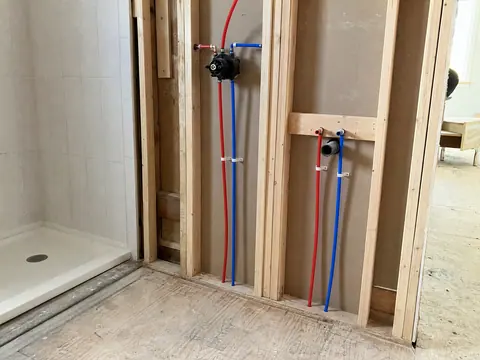 How should a remodel route the hot water?When walls are open, ask for hot runs holding 0.5 gallons or less; it is the cheapest time to shorten the wait.Plan it0.5 gal