Recirculation pump · a decision
Is a hot water recirculation pump worth it?
A hot water recirculation pump is worth it when you wait a long time for hot water and the pump runs only on demand; timer and always-on pumps save water but can raise energy use.
6.35 gal a day
gallons the average US home sends down the drain waiting for hot water (EPA, May 2026, citing LBNL 2005)
Worth it for long waits if it is a demand-start pump; skip timer or always-on pumps, which can raise energy use.
Worked out by Where Your Gallons Go from 6 dated sources · numbers checked 11 November 2026
The answer by situation
- Long wait at a far bathroom, pump started by a button or sensorWorth itSends cooled pipe water back to the heater instead of the drain, part of the 6.35 gallons a day an average home wastes.
- Pump on a timer or running around the clockSkip itEPA says timer- and temperature-based systems can raise energy use because the pump runs so often.
- Hot water arrives in a few seconds everywhereSkip itA short run holds well under EPA's 0.5-gallon benchmark, so there is little to recover.
- Gas water heater, any pump tied into itPro onlyWork on a gas heater or a pump plumbed into one is a licensed plumber's job.
How much water does waiting for hot water waste?
While people wait for hot water, the average household lets 6.35 gallons a day run to the drain, according to EPA's hot water delivery guide (May 2026), citing a 2005 Lawrence Berkeley National Laboratory estimate. That is 3.7% of indoor use, or about 2,320 gallons a year by our arithmetic. A 2011 LBNL pilot in three California homes put the loss at 30% of the water in a typical shower.
For water alone the money is small: priced at the $6.06 per 1,000 gallons that EPA's calculator assumes, 2,320 gallons comes to about $14 a year. Use the rate on your own bill. The bigger reasons to add a pump are the wait and the energy spent reheating water that cooled in the pipe.
What does a recirculation pump actually do?
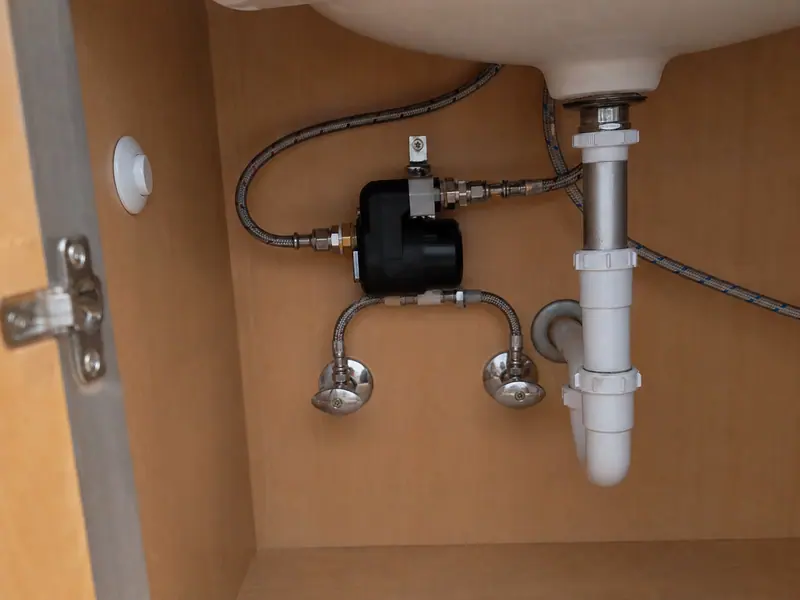
It moves cooled water out of the hot line and back to the heater, so hot water reaches the tap sooner. One layout uses a dedicated return pipe from the far fixture; the retrofit layout pushes the cooled water back through the cold line, usually through a valve under the farthest sink. EPA calls the cold-line return "often a convenient solution" for existing homes that may not match a dedicated return.
The clip is a pump maker's animation of both layouts, and its savings figure is the maker's own. It shows one daily trade-off: with a cold-line return, the cold tap at that sink can run lukewarm for a few seconds. A pump started by a button or motion sensor keeps that, and the energy use, down.
Demand pump or timer pump: which saves more?
A demand-start pump, for most homes. EPA says timer- and temperature-based systems "can increase energy use" because the pump cycles often to keep the loop hot. Demand-initiated systems run only when someone presses a button or passes a sensor, and EPA writes that their savings "typically far outweighs" the pump's energy. That line is written for new homes; a cold-line retrofit may do less well.
| Situation | Water to drain | Water cost a year | Energy (EPA) |
|---|---|---|---|
| No pump, average home | about 2,320 gal a year | about $14 | Cooled pipe water reheated from cold |
| Demand pump, dedicated return | Most wait water returned to heater | most of $14 kept | Tends to be the efficient type |
| Demand pump, cold-line return | Most wait water returned to heater | most of $14 kept | Convenient; may trail a dedicated return |
| Timer or always-on pump | Little | little | Can raise energy use |
Source under the table: US EPA WaterSense. Gallons and dollars are our arithmetic from EPA's 6.35 gallons a day and its $6.06 per 1,000 gallon calculator rate.
Is a pump the right fix, or is the pipe the problem?
Often the pipe. EPA recommends no more than 0.5 gallons stored between the hot water source and any fixture, and 50 feet of half-inch copper type L already holds about 0.61 gallons by our arithmetic. If walls are open anyway, a shorter run may fix the wait for good; see planning hot water in a remodel. Insulating exposed lines helps water stay hot between uses; see insulating hot water pipes.
Do not turn up the water heater to make hot water "arrive faster"; it does not shorten the wait. The Energy Department's archived setpoint page sets 120°F as enough for most homes and calls 140°F a scald hazard.
Who should install it?
A licensed plumber, in most homes. A dedicated return means new pipe, and a cold-line retrofit still means cutting into supply lines and setting a valve. EPA's Home Maintenance page suggests a demand recirculating system and says it may be best to hire a professional to service a water heater once a year.
Compare the pump with the other fixes on the hot water page, and check the shower end too: a WaterSense showerhead cuts the gallons used once the water is hot.
When the answer flips
- Your heater is gas: the pump may still pay off, but the install becomes a licensed pro's job.
- Your farthest fixture is close: if the run holds under 0.5 gallons, there is little to recover.
- Only timer models are offered: EPA's energy warning applies; ask for a demand-start control.
- You are remodeling: rerouting pipe to hold under 0.5 gallons can beat any pump.
What to buy or ask a plumber
- Ask for a demand-initiated control (push button or motion sensor), not a timer or thermostat-only control.
- Ask whether your home can take a dedicated return line, or only a cold-line retrofit.
- On a gas heater, have a licensed plumber do the whole job.
- If the pump needs a new outlet or hard wiring, hire a licensed electrician for that part.
Also asked
Does a cold-line recirculation retrofit make the cold water warm?
It can, for a few seconds at the sink where the valve sits, because cooled hot water is pushed into the cold line. A demand-start control limits how often that happens, and a dedicated return avoids it.
How long a wait justifies a recirculation pump?
EPA uses volume, not seconds: 0.5 gallons or less between the source and a fixture. At 2.0 gallons a minute, clearing 0.61 gallons takes about 18 seconds, before counting the time to warm the pipe itself.
Will a recirculation pump cut my water bill much?
Not on water alone. The average home's 2,320 gallons a year of wait water comes to roughly $14 using EPA's assumed price. The larger gains are the shorter wait and less reheating.
Is a pump built into the water heater the same thing?
Not always. EPA says integrated pumps either keep water ready inside the heater for the first draw or circulate it through the house. Ask which kind it is before counting on it at far taps.
How we reached this
The verdict leans on EPA's May 2026 builder guide, the one current federal document we found that compares timer, temperature and demand systems; it cites LBNL's 2005 wait estimate. The 2,320 gallons and $14 are our arithmetic at EPA's $6.06 rate. No federal figure says how much wait water a pump recovers in a real retrofit, so the table says "most" rather than a number. Pump and running costs are left to your quote.
Sources
- US EPA WaterSense — Best Practices for Efficient Hot Water Delivery in Homes (May 2026) · 6.35 gal/day, 3.7%, pump types, cold-line return, pipe volumes · checked 11 Nov 2026
- US EPA WaterSense — WaterSense Labeled Homes: Hot Water · 0.5-gallon benchmark · checked 11 Nov 2026
- US EPA WaterSense — Home Maintenance · demand recirculation; professional heater service · checked 11 Nov 2026
- US EPA WaterSense — How the WaterSense Calculator Works · $6.06 per 1,000 gallons · checked 11 Nov 2026
- US DOE Energy Saver — Lower Water Heating Temperature · 120°F; scald hazard at 140°F · archived copy of 1 Jan 2026
- Lawrence Berkeley National Laboratory — Water and Energy Wasted During Residential Shower Events (2011) · 30% shower water waste, 3-home pilot · checked 11 Nov 2026
More from the hot water
 Should you insulate your hot water pipes?Insulate exposed hot pipes, first 3 feet at the heater first; keep foam at least 6 inches from a gas flue.Insulate50%
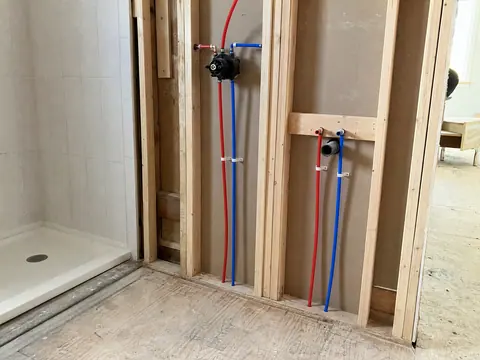 How should a remodel route the hot water?When walls are open, ask for hot runs holding 0.5 gallons or less; it is the cheapest time to shorten the wait.Plan it0.5 gal