Faucet · a decision
Is a dripping faucet worth fixing now?
A dripping faucet wastes more than most people guess: at one drip a second, EPA's figure is more than 3,000 gallons a year, enough water for over 180 showers.
3,000+ gal
gallons a year from a tap dripping once a second (EPA Fix a Leak Week; DOE's archived estimate is 1,661)
Fix it this week: at one drip a second, EPA counts more than 3,000 gallons a year down the drain.
Worked out by Where Your Gallons Go from 8 dated sources · numbers checked 11 November 2026
The answer by situation
- Tap drips steadily, about once a secondFix nowEPA's number for that rate is more than 3,000 gallons a year.
- Showerhead drips after you shut it offFix soonTen drips a minute adds up to more than 500 gallons a year, by EPA's count.
- Stop valve under the sink will not closePlumber firstAny repair needs a working shutoff; replacing a seized valve is plumbing work.
- Old faucet that drips and runs fastReplace itWaterSense bathroom faucets flow at 1.5 gpm or less, against 2.2 for the federal maximum.
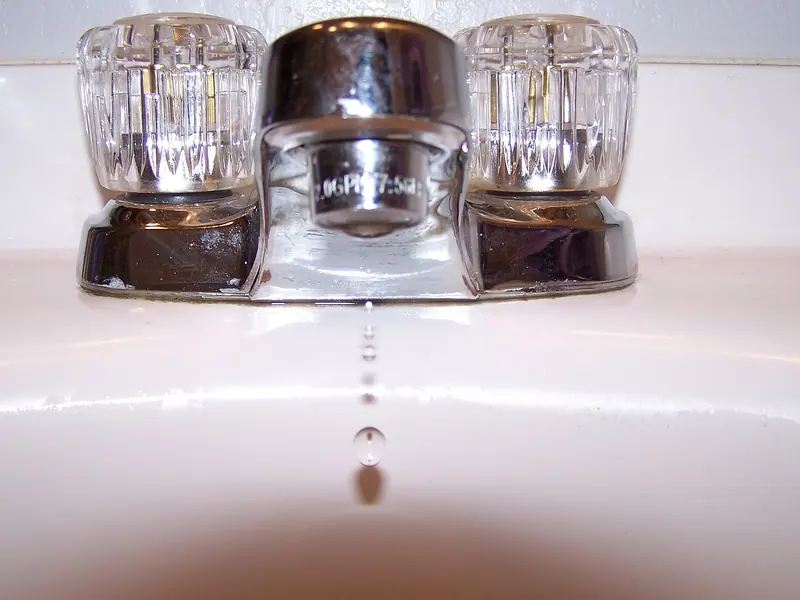
How much water does a dripping faucet waste?
More than 3,000 gallons a year at one drip a second, says EPA's Fix a Leak Week page, which equates that to more than 180 showers. The same page counts more than 500 gallons a year for a showerhead leaking 10 drips a minute.
Those two figures agree with each other. Ten drips a minute is one-sixth of the once-a-second rate, and 3,000 divided by six is 500, by our arithmetic. So you can scale from what you see: count drips for one minute and divide by 60 to compare with EPA's rate.
Why does DOE give a smaller number?
Different drop sizes, most likely. The Department of Energy's hot water page, in an archived copy of January 1, 2026, puts one drip a second at 1,661 gallons a year and up to $35. Neither page shows the drop volume behind its figure. Treat DOE's as the low end and EPA's as the high end; both say the same thing about whether to fix it.
DOE's dollar figure sits on a page about hot water, which is the point worth keeping: a hot-side drip also wastes the energy that heated it.
| Drip | Gallons a year | Water and sewer at EPA's price |
|---|---|---|
| Once a second (EPA) | 3,000+ | $18.18+ |
| Once a second (DOE, archived) | 1,661 | $10.07 (DOE says up to $35) |
| Once every two seconds (half of EPA's rate) | 1,500+ | $9.09+ |
| Showerhead, 10 a minute (EPA) | 500+ | $3.03+ |
Source under the table: EPA Fix a Leak Week and DOE Energy Saver (archived). The gallons are each agency's own; the half-rate row and the water cost column are our arithmetic, at EPA's calculator price of $6.06 per 1,000 gallons, and leave out heating energy.
The dollars look small for one tap. Across a whole house, though, EPA puts typical leak losses above 9,300 gallons a year, and says fixing the easy ones trims about 10% off a water bill.
What is the first step to fix a dripping faucet?
Shut the water to that faucet. Close the stop valve under the sink, usually one for hot and one for cold, then open the faucet to drain the pressure from the line. Plug the drain so small parts cannot fall in.
Then follow the maker's instructions for your model, and take the worn part along when you shop. Should the stop valve refuse to close, or start leaking itself when turned, stop and have it replaced first; that valve is what every future repair depends on.
Is it better to repair the faucet or replace it?
Repair a sound faucet; replace one that is worn out, corroded, or older than the federal flow rules. Since 1994, 10 CFR 430.32 has held new bathroom and kitchen faucets to 2.2 gpm, measured at 60 psi, and WaterSense labeled bathroom faucets and aerators run at 1.5 or less. EPA says swapping old faucets and aerators for labeled ones saves the average family 700 gallons a year. See bathroom faucet aerators or kitchen faucet flow for the choice in each room.
What about a dripping showerhead or tub spout?
Check the shower the same way. A head that keeps dripping after the valve is closed points to the valve, not the head; the showerhead swap page covers the head itself. EPA's leak checklist adds a tub test: turn the water to the shower, and if plenty still pours from the spout, the diverter may need replacing.
Is the drip a sign of something bigger?
Sometimes. Hard water deposits can plug fixtures over time, NDSU Extension notes, and EPA lists irregular water pressure among causes of household leaks. If several faucets drip, or new washers fail fast, have the pressure tested; the pressure reducing valve page shows how. A meter leak test will also tell you whether the drip is the only leak in the house.
When the answer flips
- The drip is under the sink, not from the spout: that is a supply or drain leak, and it can damage the cabinet; fix it first.
- The stop valve is seized or leaks when turned: the job becomes replacing that valve, which is a plumber's work if you are unsure.
- The faucet is pre-1994 or badly corroded: replacing it with a 1.5 gpm WaterSense bathroom model saves more than repairing.
- Several fixtures drip at once: test the water pressure before replacing parts one by one.
What to buy or ask a plumber
- Bring the worn part, or a photo of the faucet and its markings, so the replacement matches.
- For a bathroom faucet, look for the WaterSense label (1.5 gpm or less at 60 psi).
- Ask a plumber to replace any stop valve that will not close fully or leaks at its stem.
- Ask whether your water utility runs a leak repair rebate or free house call; some do.
Also asked
How do I count how fast my faucet drips?
Hold a cup under it and count drops for one minute. Sixty a minute is EPA's once-a-second rate, worth more than 3,000 gallons a year; thirty is about half that.
Does a hot water drip cost more than a cold one?
Yes, because the water was heated first. DOE's up-to-$35 estimate comes from its page on hot water use, and that cost is on top of the water itself.
Can a dripping faucet raise my bill noticeably?
On its own, by a few dollars a year at EPA's assumed price. The stronger reason to act is that it adds to the household's other leaks, which EPA puts above 9,300 gallons a year.
Will a dripping faucet show up on the water meter?
It should, slowly. At about 8 gallons a day, EPA's once-a-second drip moves the meter roughly two-thirds of a gallon during a two-hour test, by our arithmetic.
How we reached this
Our verdict rests on EPA's drip figures from the Fix a Leak Week page, updated March 13, 2026, with DOE's archived 1,661-gallon estimate shown once as the lower bound. Neither agency shows its drop size, so the gap between them cannot be settled here. Dollar figures use EPA's calculator price, not a local rate, and ignore the energy in a hot-water drip. Repair steps stay general because faucet designs differ; the maker's instructions for your model govern the details.
Sources
- US EPA WaterSense — Fix a Leak Week · 3,000+ gallons at one drip a second, 500+ for a showerhead, 9,300+ household total, 10% bill saving · checked 11 Nov 2026
- US DOE Energy Saver — Reduce Hot Water Use for Energy Savings · 1,661 gallons and up to $35 a year · archived copy of 1 Jan 2026, checked 11 Nov 2026
- eCFR — 10 CFR 430.32 Energy and water conservation standards · 2.2 gpm faucet limit for products made after Jan 1, 1994 · checked 11 Nov 2026
- US EPA WaterSense — Bathroom Faucets · 1.5 gpm label, 700 gallons a year per family · checked 11 Nov 2026
- US EPA WaterSense — Detect and Chase Down Leaks checklist · tub spout diverter check · checked 11 Nov 2026
- NDSU Extension — Water Softening (Ion Exchange) · scale deposits plugging fixtures · checked 11 Nov 2026
- US EPA — Know Your Flow guide (February 2026) · irregular pressure as a leak cause · checked 11 Nov 2026
- US EPA WaterSense — How the WaterSense Calculator Works · $6.06 per 1,000 gallons · checked 11 Nov 2026
More from the leaks and pressure
 How do you run a water meter leak test?Read the meter, use no water for two hours, read it again; any movement means a probable leak to track down.Test now9,300+ gal
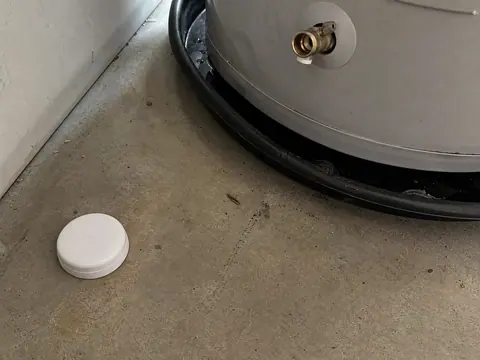 Leak sensor or automatic shutoff valve: which do you need?Start with plug-in sensors at the heater, washer and sinks; add a main-line shutoff if a burst would cost dearly.Depends4,300 gal a day
 Do you need a pressure reducing valve?Put a gauge on a hose bibb with all water off; if it reads well above 60 psi, have a plumber adjust or fit a PRV.Test first45–60 psi