Rooms › Hot water
Room · 3 decisions
Where does the hot water go before it arrives?
Hot water waste starts before the water is hot: EPA says the average home pours 6.35 gallons a day down the drain waiting at showers and faucets, about 2,320 gallons a year by our arithmetic.
Numbers checked 11 November 2026
 Is a hot water recirculation pump worth it?Worth it for long waits if it is a demand-start pump; skip timer or always-on pumps, which can raise energy use.Demand only6.35 gal a day
 Should you insulate your hot water pipes?Insulate exposed hot pipes, first 3 feet at the heater first; keep foam at least 6 inches from a gas flue.Insulate50%
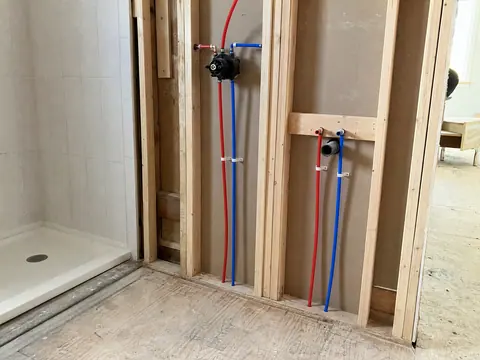 How should a remodel route the hot water?When walls are open, ask for hot runs holding 0.5 gallons or less; it is the cheapest time to shorten the wait.Plan it0.5 gal
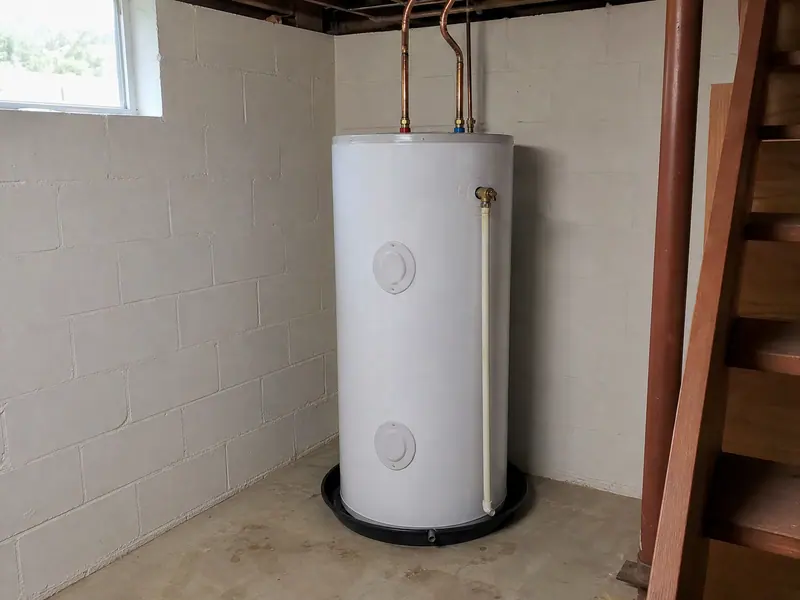
That wait is water that sat in the pipe and cooled. How much depends on how far the tap is from the heater and how wide the pipe is. EPA's hot water delivery guide (May 2026) sets half a gallon as the most that should sit in the line from heater to tap, a benchmark rather than a rule. Fifty feet of half-inch copper already holds about 0.61 gallons.
Three decisions follow, from the easiest to the biggest job.
Should you insulate your hot water pipes?
Yes, wherever you can reach them, starting with the first 3 feet at the heater. EPA says insulation as thick as the pipe is wide halves the temperature drop to the tap; read insulating hot water pipes for thickness and the gas-flue clearances.
Is a hot water recirculation pump worth it?
For a long wait at a far fixture, yes, if the pump starts on demand by a button or sensor. EPA warns that timer and always-on pumps can raise energy use; see recirculation pumps, and leave any pump on a gas heater to a licensed plumber.
How should a remodel route the hot water?
Plan each run to hold half a gallon or less while the walls are open, using shorter and smaller lines where code allows. See planning hot water in a remodel for how many feet of each pipe fit under EPA's benchmark.
What should you not do?
A hotter tank setting will not bring hot water sooner, so leave it alone. The Energy Department's archived guidance says 120°F suits most households and 140°F water can scald. Gas water heaters, with their vents and gas piping, are for a licensed pro to work on. At any smell of gas, get out without using switches, flames or phones, then phone 911 and the gas company once you are outside.
Once hot water reaches the shower, a WaterSense showerhead decides how much of it you use. The rest of the house is mapped on the home page.
| Decision | Typical gallons a year | Source |
|---|---|---|
| Average home's wait for hot water | about 2,320 (6.35 a day) | EPA hot water guide, May 2026 |
| Demand-start recirculation pump | returns most of the wait water to the heater; no EPA figure | EPA hot water guide |
| Pipe insulation | no gallon figure; temperature drop halved | EPA hot water guide |
| Remodel to a 0.5-gallon run | 0.5 gal a wait or less, against 0.61 for 50 ft of ½-inch copper | EPA Table 2 |
Source under the table: US EPA WaterSense — Home Maintenance. The 6.35 gallons a day is EPA's; yearly gallons and pipe volumes are our arithmetic from EPA's figures and its Table 2.
How we reached this
This room rests on EPA's WaterSense hot water guide for builders, dated May 2026, and its Home Maintenance page, with the Energy Department's archived Energy Saver pages for the safety settings. Those Energy Saver pages are no longer published, so this room relies on archived copies (Internet Archive) from 1 Jan 2026. No federal source gives a per-home gallon saving for pumps or insulation, so the table does not invent one.
Sources
- US EPA WaterSense — Best Practices for Efficient Hot Water Delivery in Homes (May 2026) · 6.35 gal/day, 0.5 gal benchmark, pump types, insulation, Table 2 · checked 11 Nov 2026
- US EPA WaterSense — Home Maintenance · demand recirculation; insulate tank and pipes · checked 11 Nov 2026
- US DOE Energy Saver — Insulate Hot Water Pipes · first 3 feet; gas flue clearances · archived copy of 1 Jan 2026
- US DOE Energy Saver — Lower Water Heating Temperature · 120°F; scald at 140°F · archived copy of 1 Jan 2026