Water meter · a decision
How do you run a water meter leak test?
A water meter leak test takes two hours and a screwdriver: read the meter, use no water, read it again, and any change at all means you probably have a leak.
9,300+ gal
gallons a year the average household's leaks waste (EPA Fix a Leak Week page, updated March 13, 2026)
Read the meter, use no water for two hours, read it again; any movement means a probable leak to track down.
Worked out by Where Your Gallons Go from 6 dated sources · numbers checked 11 November 2026
The answer by situation
- Meter reads the same after two hoursNo leak foundEPA treats an unchanged reading as a pass; repeat after any big bill jump.
- Meter moved with everything offFind the leakStart with toilets: EPA says about one in five leak.
- Winter bill over 12,000 gallons for four peopleTest nowEPA says a family of four above 16 CCF a month with no outdoor use likely has a serious leak.
- Moving meter, every fixture checks outCall a proA buried line or slab leak needs your water utility or a licensed plumber to trace.
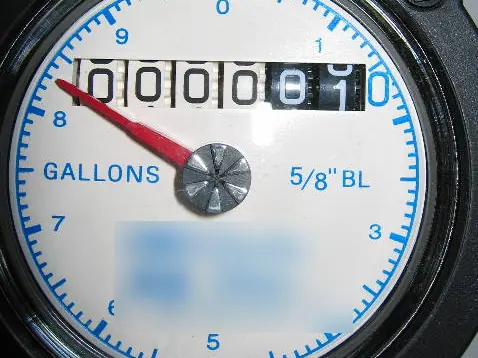
How do you do the two-hour meter test?
Read the meter, use no water for two hours, then read it again. EPA's Fix a Leak Week page puts it plainly: if the meter changes at all, you probably have a leak. Its older leak checklist adds the practical steps.
- Find the meter. It is usually in a box near the curb, or inside, often in a basement, in cold climates.
- Open the lid with a screwdriver. It is heavy and usually marked "water".
- Turn off every tap and appliance, and pause the irrigation timer, the ice maker and anything else that draws water on its own.
- Write down the full reading, or take a photo.
- Wait two hours without using water, then read it again.
A water softener that starts a regeneration during the window will move the meter too, so check its schedule first; the water softener page explains how often that happens.
What does a moving meter mean in gallons?
Anything from a few gallons a day to thousands. EPA's figures below give the scale of common household leaks.
| Leak | Gallons | Over | Water cost EPA cites |
|---|---|---|---|
| Average household, all leaks | 9,300+ | a year | not given |
| Home in the leakiest 9%, at 50+ gallons a day | 18,250+ | a year | not given |
| Faucet dripping once a second | 3,000+ | a year | not given |
| Showerhead at 10 drips a minute | 500+ | a year | not given |
| Irrigation leak 1/32 inch across | 6,300 | a month | not given |
| Stuck toilet fill valve | 4,300 | a day | up to $1,400 a month |
Source under the table: EPA Fix a Leak Week and Know Your Flow. Each row is EPA's figure for one kind of leak; the 18,250 is our arithmetic (50 gallons times 365 days), and the fill valve row comes from EPA's two-page Know Your Flow summary of February 2026.
Fixing the easy ones, EPA adds, trims about 10% from a typical water bill.
Where should you look first if the meter moves?
Toilets. EPA's February 2026 Know Your Flow guide puts the share of leaking toilets at about one in five. The dye test, flappers and fill valves are on the running toilet page; color reaching the bowl within 10 minutes, with no flush, is the sign.
Next come taps and the tub. With the shower running, a strong stream still leaving the tub spout points to a worn diverter, by EPA's checklist; drips are covered on the dripping faucet page. Then the yard, where a hole the thickness of a dime in an irrigation line can lose about 6,300 gallons a month.
Can your bill show a leak without the test?
Often. EPA's Home Maintenance page says a family of four with no outdoor water use in winter likely has a serious leak if it uses more than 12,000 gallons, or 16 CCF, a month. It also suggests comparing each bill with the same month a year earlier. A jump with no change in household or habits is a reason to run the meter test.
What if every fixture checks out?
Then the leak may be in the pipe between the meter and the house, or under a slab. That needs a professional with tracing equipment: start with your water utility, which can confirm the meter reading, then a licensed plumber. Some utilities share the cost: Roseville, California has paid half of eligible repairs, to a $750 cap, since mid-July 2026 when its free house call confirms a leak. Water utility rebates explains how to look for a local program.
Does a smart meter or app replace this test?
Not entirely. EPA's guide notes that alerts from utility smart-meter (AMI) systems can lag by days, wasting more water than an in-home device would. A flow monitor in the house reports sooner, which the leak sensor or shutoff valve page weighs up. The two-hour test costs nothing and works on any meter.
When the answer flips
- The meter moved but a softener or ice maker cycled during the window: rerun the test with them paused before hunting for leaks.
- Your meter has a low-flow indicator: watching it with everything off can show a leak in minutes, as the Helix video does in an hour.
- Your meter is shared with other units: the test cannot separate your leak from a neighbour's use; ask your utility or landlord.
- The meter is still after two hours but the winter bill tops 12,000 gallons for four people: check the reading against the bill and ask your utility.
What to buy or ask a plumber
- Ask your water utility how to read your meter model and where its low-flow indicator is.
- If the meter moves and no fixture is leaking, ask a licensed plumber for a leak trace on the service line and under any slab.
- Ask whether your utility offers leak repair help or a free house call, as Roseville's does.
Also asked
How long should a meter leak test last?
EPA's test runs two hours with no water use. The Helix Water District video uses one hour while watching the low-flow indicator; a longer window catches slower leaks.
What is the low-flow indicator on a water meter?
It is a small dial or display that moves with even a slight flow, so it shows a slow leak sooner than the main register. Not every meter has one; your utility can tell you about yours.
My meter is inside the basement. Does the test still work?
Yes. In cold climates EPA expects many meters indoors; the steps do not change.
How much is a slow drip in two hours?
EPA's one-drip-a-second faucet loses over 3,000 gallons a year, about 8 a day. Two hours of that is roughly two-thirds of a gallon by our arithmetic.
How we reached this
The test itself is EPA's: two hours, no water use, any change counts. Leak sizes are EPA figures come from EPA's Fix a Leak Week page (updated March 13, 2026) and its two Know Your Flow documents of February 2026; other EPA pages give slightly different household totals, and we kept the 9,300. The winter benchmark comes from the Home Maintenance page (updated June 16, 2026) and assumes no outdoor use. How to read a particular dial is left to your utility. Only the 18,250 and the two-hour drip estimate are our own sums.
Sources
- US EPA WaterSense — Fix a Leak Week · two-hour meter test, dye test, household and per-leak figures · checked 11 Nov 2026
- US EPA WaterSense — Detect and Chase Down Leaks checklist · meter location and lid steps, tub diverter check · checked 11 Nov 2026
- US EPA WaterSense — Home Maintenance · 12,000 gallons (16 CCF) winter benchmark · checked 11 Nov 2026
- US EPA — Know Your Flow guide (February 2026) · 20% of toilets leak, AMI alert lag · checked 11 Nov 2026
- US EPA — Know Your Flow summary (February 2026) · stuck fill valve 4,300 gallons a day, up to $1,400 a month · checked 11 Nov 2026
- City of Roseville — New rebate helps homeowners fix leaks and save water · 50% up to $750 leak repair rebate from July 15, 2026 · checked 11 Nov 2026
More from the leaks and pressure
 Is a dripping faucet worth fixing now?Fix it this week: at one drip a second, EPA counts more than 3,000 gallons a year down the drain.Fix now3,000+ gal
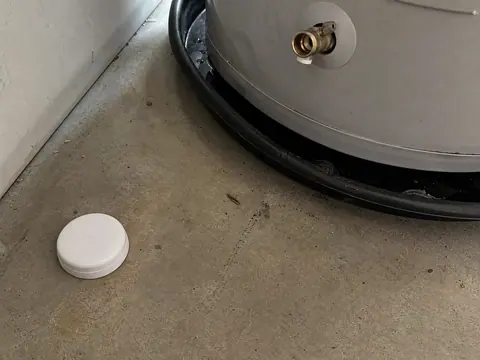 Leak sensor or automatic shutoff valve: which do you need?Start with plug-in sensors at the heater, washer and sinks; add a main-line shutoff if a burst would cost dearly.Depends4,300 gal a day
 Do you need a pressure reducing valve?Put a gauge on a hose bibb with all water off; if it reads well above 60 psi, have a plumber adjust or fit a PRV.Test first45–60 psi