Rooms › Kitchen and laundry
Room · 4 decisions
Kitchen and laundry: where the water goes
Water efficient appliances save the most when they replace a habit: a full certified dishwasher beats an open tap by thousands of gallons a year, while a new washer or faucet saves hundreds.
Numbers checked 11 November 2026
 Dishwasher or hand washing: which uses less water?Run a full ENERGY STAR dishwasher rather than washing by hand; scrape plates and skip the pre-rinse.Use it8,400 gal
 Should you replace an old washing machine?Keep a working washer; when it fails, buy ENERGY STAR, which uses about 14 gallons a load instead of 20.Upgrade later1,800 gal
 What kitchen faucet flow rate should you choose?Keep a working 2.2 gpm faucet and shorten how long it runs; choose 1.8 gpm when you replace it.Habits first10 gal
 Does a water softener waste water?A softener is a hardness choice, not a water saver; if you have or need one, choose demand regeneration.Demand control~50 gal
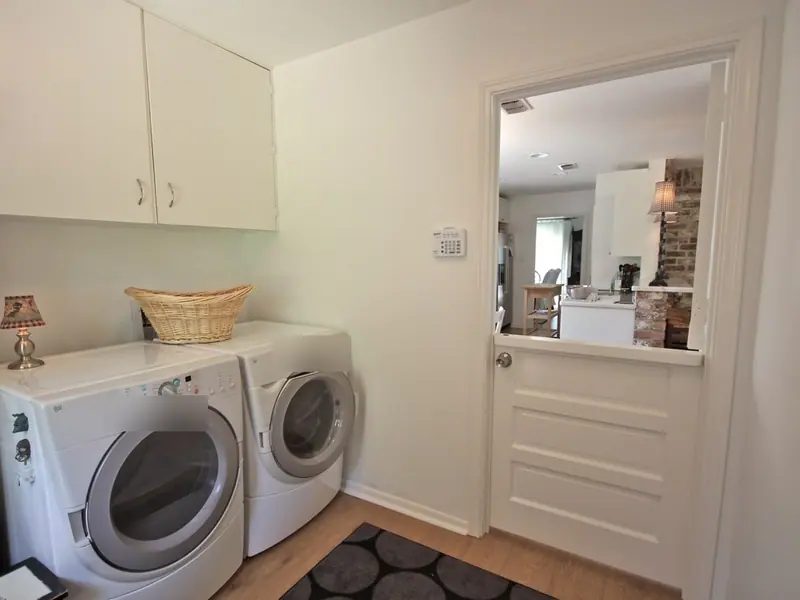
By the 2016 Water Research Foundation figures EPA charts on its How We Use Water page, laundry takes 17 percent of indoor use in a single-family house and faucets, kitchen and bath combined, 19 percent. Dishwashers sit inside the 8% marked "other", with baths. The rooms are small on the chart next to toilets and showers, but the choices here are cheap to get right, and one of them, the softener, adds water rather than saving it.
Is a dishwasher better than washing by hand?
Yes, when it runs full. ENERGY STAR says a certified machine saves 8,400 gallons a year over hand washing and caps standard models at 3.2 gallons a cycle; the dishwasher or hand washing page sets that against the open tap.
Should you replace an old washing machine?
Usually when it fails, not before. At ENERGY STAR's 14 and 20 gallons a load for certified and standard machines, the yearly gap is about 1,800 gallons by our arithmetic, and replace an old washing machine shows when front-loading changes the sum.
Does a kitchen faucet's flow rate matter?
Less than how long it runs. Dropping from 2.2 to 1.8 gpm saves about 730 gallons a year in our five-minute example, while shutting the tap two minutes sooner saves about 1,600; kitchen faucet flow has the state limits too.
Does a water softener waste water?
It draws roughly 50 gallons each time it regenerates, by Penn State and Nebraska extension estimates. That makes it a hardness decision rather than a saving one; if you have or need one, water softener water use explains why demand control beats a timer.
| Decision | Typical gallons a year | Source |
|---|---|---|
| Certified dishwasher instead of hand washing | 8,400 saved | ENERGY STAR Dishwashers |
| Certified washer instead of a standard one, 300 loads | about 1,800 saved | Our arithmetic from ENERGY STAR Clothes Washers |
| Kitchen tap shut two minutes sooner a day, at 2.2 gpm | about 1,606 saved | Our arithmetic from the federal 2.2 gpm limit |
| Kitchen faucet at 1.8 gpm instead of 2.2, five minutes a day | about 730 saved | Our arithmetic from federal and California limits |
| Dishwasher run only when full | nearly 320 saved | EPA Statistics and Facts |
| Demand-control softener, family of four | about 2,600 to 3,050 used | Our arithmetic from Penn State Extension |
Source under the table: ENERGY STAR, EPA WaterSense and Penn State Extension. Saving rows are gallons kept out of the drain; the softener row is gallons used, not saved; rows marked as our arithmetic show the working on each decision page.
Two patterns run through the table. Habits, such as scraping instead of rinsing and running full loads, cost nothing and often beat hardware. And federal limits, from 10 CFR 430.32, apply only to appliances and faucets made after their dates: nothing here forces you to replace a working machine. The wider timing question lives on replace now or when it breaks; for money back, water utility rebates.
How we reached this
We put each decision in gallons a year so they can be compared on one scale. ENERGY STAR and EPA rows are their published averages as shown on 11 Nov 2026; ENERGY STAR does not describe its hand-washing household on the dishwasher page. The washer row uses ENERGY STAR's 300 loads a year, the faucet rows assume five minutes of running tap a day, and the softener row assumes Penn State's sizing example of four people at 10 grains per gallon. Water-heating energy, which matters a great deal for washers and dishwashers, is left out of the gallons.
Sources
- US EPA WaterSense — How We Use Water · clothes washer 17%, faucets 19%, other 8% (WRF 2016) · checked 11 Nov 2026
- ENERGY STAR — Dishwashers · 8,400 gallons a year versus hand washing · checked 11 Nov 2026
- ENERGY STAR — Clothes Washers · 14 versus 20 gallons a load, 300 loads a year · checked 11 Nov 2026
- eCFR — 10 CFR 430.32 Energy and water conservation standards · 2.2 gpm kitchen faucet limit and other appliance limits · checked 11 Nov 2026
- US EPA WaterSense — Statistics and Facts · nearly 320 gallons from full dishwasher loads · checked 11 Nov 2026
- Penn State Extension — Water Softening · about 50 gallons per regeneration, sizing example · checked 11 Nov 2026