Rooms › Bathroom
Room · 6 decisions
Where the bathroom's gallons go
Water saving bathroom fixtures matter because toilets, showers and faucets make up 63% of indoor use in EPA's breakdown; fix a running toilet first, then replace anything from before 1994.
Numbers checked 11 November 2026
 Should you replace an old toilet?Replace it if it was made before 1994; keep a working 1.6 gpf toilet unless it leaks or you remodel.Replace10,640 gal
 Running toilet: fix it or replace it?Fix a running toilet this week; replace the whole toilet only if it is a pre-1994 model or the china is cracked.Fix now200 gal a day
 Dual flush or single flush: which saves more?Either works; pick dual flush only if its full flush is 1.28 gpf or less and your household uses the half button.Depends1,530 gal
 Is a low-flow showerhead swap worth it?Swap a head that fills a gallon in under 20 seconds for a WaterSense model rated 2.0 gpm or less.Swap it2,700 gal
 Should you swap your bathroom faucet aerator?Screw on a 1.5 gpm WaterSense aerator if the faucet is marked 2.2 gpm or unmarked; the faucet can usually stay.Swap it700 gal
 Bath or shower: which uses less water?Shower for everyday washing; a full bath uses about as much as a 35-minute shower on a 2.0 gpm head.Shower54 gal
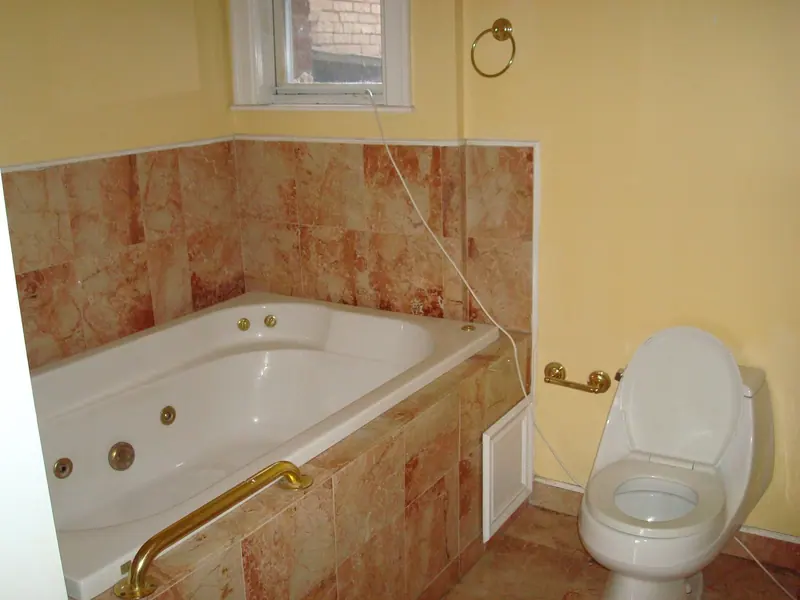
The bathroom holds the three biggest indoor uses in EPA's How We Use Water chart, which credits a 2016 Water Research Foundation study: toilets 24%, showers 20% and faucets 19%. EPA's Statistics and Facts page claims a main-bathroom refit with a labeled toilet, showerhead and aerator may earn back its cost within about a year; EPA lists no cost assumptions for that. Each decision below has its own page with the numbers.
Should you replace an old toilet?
Yes, if it predates 1994. Trading 3.5 gpf for 1.28 gpf saves roughly 10,640 gallons a year (our arithmetic); a sound 1.6 gpf toilet gains about 1,530. Ledger on replace an old toilet.
Is a running toilet worth fixing right away?
Yes, this week. A worn flapper can leak about 200 gallons a day (EPA, archived 2017); a fill valve stuck open, up to 4,300 (EPA, 2026). See running toilet: fix or replace.
Is dual flush better than single flush?
Only when the full flush is 1.28 gpf or less and people use the half button. The labeled average assumes two small flushes for every full one; dual flush or single flush shows what happens when habits drift.
Is a low-flow showerhead worth it?
Usually, if your head fills a gallon bucket in under 20 seconds. EPA credits labeled heads with 2,700 gallons and over 330 kWh a year per average family; how to time yours is on showerhead swap.
Does a faucet aerator make a difference?
A small one, cheaply. Dropping from 2.2 to 1.5 gpm cuts the sink's top flow by 32%, worth some 700 gallons yearly to a typical family, per bathroom faucet aerator.
Should you take a bath or a shower?
A shower, for most people. A full tub can take up to 70 gallons by EPA's 2017 archived figure, as much as a 35-minute shower on a 2.0 gpm head; bath or shower has the break-even math.
| Decision | Typical gallons a year | Source |
|---|---|---|
| Fix a toilet that runs all day | about 73,000 | Our arithmetic from EPA's 2017 archived 200 gallons a day |
| Replace a 3.5 gpf toilet with 1.28 gpf | about 10,640 | Our arithmetic from EPA calculator assumptions |
| One weekly bath traded for a short shower | about 2,810 | Our arithmetic from EPA's 2017 archived tub figure |
| WaterSense showerheads | 2,700 | EPA Showerheads page |
| Dual flush 1.28/0.8 instead of a 1.28 single flush | about 1,530 | Our arithmetic from the WaterSense spec |
| Replace a working 1.6 gpf toilet with 1.28 gpf | about 1,530 | Our arithmetic from EPA calculator assumptions |
| WaterSense bathroom faucets or aerators | 700 | EPA Bathroom Faucets page |
Source under the table: EPA WaterSense and EPA archived pages. Rows marked "our arithmetic" multiply EPA's own figures for an average home; EPA rows are its published family estimates; each decision's page shows the working.
Federal limits and most state rules apply to products made or sold after their dates, but California required single-family homes built on or before January 1, 1994 to replace toilets over 1.6 gpf, showerheads over 2.5 gpm and faucets over 2.2 gpm by January 1, 2017 (2019 for multifamily), with a few exemptions, and some cities add rules at sale or remodel. For timing across the whole house, see replace now or when it breaks; for state limits, state fixture rules.
How we reached this
We ranked the room by gallons a year because that is the one unit every decision shares. The EPA figures are national family averages, checked 11 Nov 2026; the rows marked as our arithmetic assume a 2.6-person home, EPA's 5.05 daily flushes each and, for the bath row, one swap a week. The running-toilet row assumes a leak that runs all year, which most households would notice sooner on the bill. Prices and rebates are left out because they vary by town.
Sources
- US EPA WaterSense — How We Use Water · toilet 24%, shower 20%, faucet 19% (WRF 2016) · checked 11 Nov 2026
- US EPA WaterSense — Statistics and Facts · main bathroom makeover pays back in as little as 1 year · checked 11 Nov 2026
- US EPA WaterSense — How the WaterSense Calculator Works · flush assumptions behind the toilet rows · checked 11 Nov 2026
- US EPA — US Indoor Water Use, archived copy of January 19, 2017 · running toilet about 200 gallons a day · checked 11 Nov 2026
- US EPA — Simple Steps to Save Water, archived copy of January 19, 2017 · full tub up to 70 gallons · checked 11 Nov 2026
- US EPA WaterSense — Showerheads · 2,700 gallons a year · checked 11 Nov 2026
- US EPA WaterSense — Bathroom Faucets · 700 gallons a year · checked 11 Nov 2026
- US EPA — WaterSense Specification for Tank-Type Toilets, Version 1.2 · dual-flush averaging · checked 11 Nov 2026